 IGNITE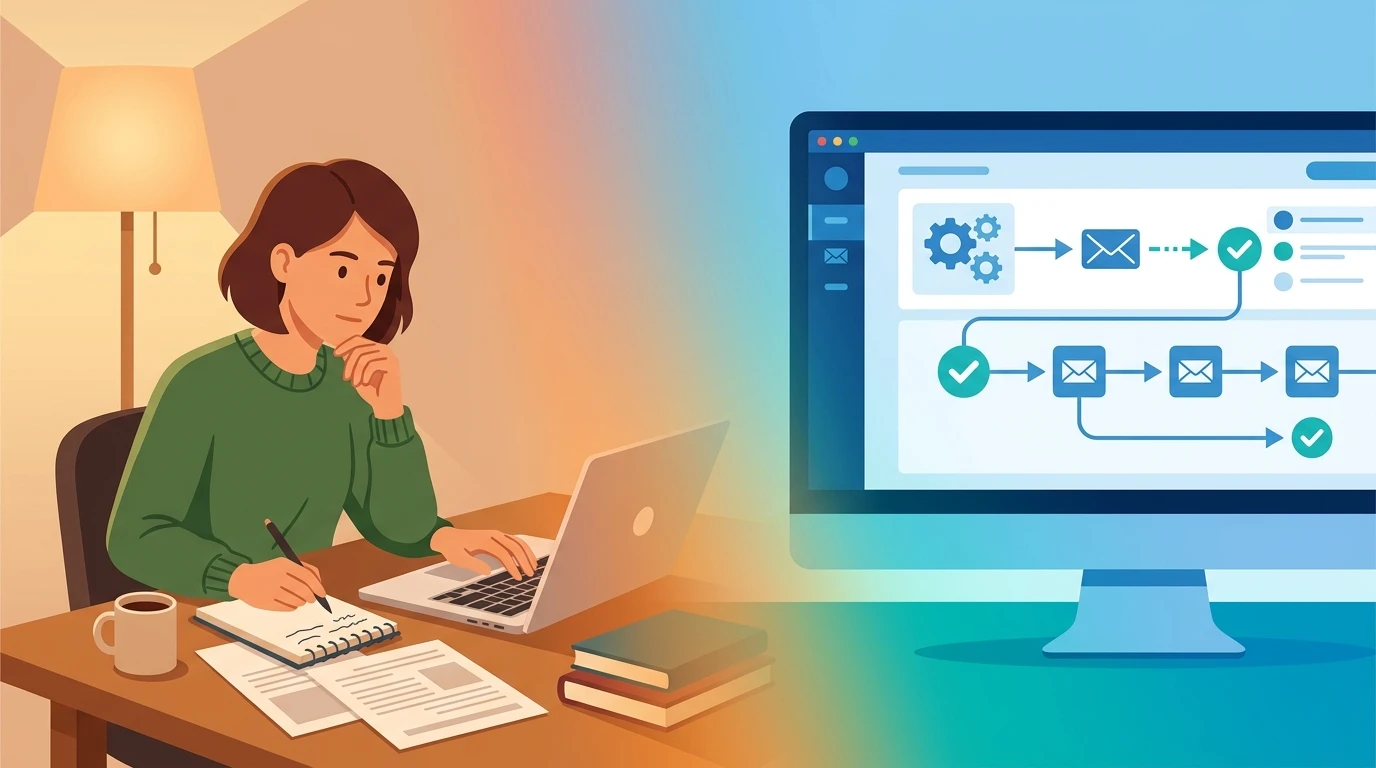
Most businesses that fail at automation didn't pick the wrong tool. They automated too early. They took a message that wasn't working, a follow-up sequence nobody had tested, a content calendar nobody had proven, and they just... made it faster. Congrats, you now send bad emails at scale.
The question isn't automation vs. manual. It's sequencing. Do the human work first. Build the machine second. That order matters more than any software you pick.
Manual Marketing Isn't a Phase. It's the Research Lab.
Here's the thing nobody says out loud: the early stage of your marketing isn't supposed to be efficient. It's supposed to be educational. You're not trying to scale yet. You're trying to figure out what actually works.
When you write a post yourself, reply to a lead personally, or film a video explaining your product in your own words, you learn things no automation can teach you. You learn which objections come up every single time. You learn what language your customers use to describe their own problem. You learn which stories make people lean in and which ones get a polite nod and a quick change of subject.
That raw material is gold. It's the foundation your automation will eventually run on. Skip it, and you'll spend months tweaking sequences that were broken from the start.
Short-form video is a perfect example. According to HubSpot's 2026 State of Marketing survey of 1,500+ marketers, 21% of marketers rank TikTok, YouTube Shorts, and Instagram Reels as their highest-ROI content format. But the content that actually performs in those channels is founder-led, specific, and personal. You can't automate authenticity. You can only amplify it once you've found it.
Where Manual Breaks Down (And It Will)
Manual works until it doesn't. The math is simple.
If you're following up on 30 leads a month, you can do that by hand. It takes time, but it's manageable. You remember context, you personalize naturally, and nothing falls through the cracks.
At 150 leads a month, something starts to slip. You forget the third touchpoint. You send the same generic message to everyone because you don't have time to think. You lose track of who's hot and who went cold two weeks ago.
At 300 leads a month, manual follow-up isn't a workflow. It's a crisis.
This is the inflection point. Not a philosophical one. A practical one. The moment where the cost of doing it by hand exceeds the cost of building the system. For most mid-size businesses, that moment arrives faster than they expect.
The other place manual breaks down is consistency. Humans are inconsistent by nature. We have good weeks and bad weeks. We get buried in a big client and let the pipeline go cold. Automation doesn't have bad weeks. It sends the follow-up on day three whether you remembered or not.
The Efficiency Trap (Read This Before You Automate Anything)
Here's the number that should give you pause: 52% of marketers say AI has made content easier to create but less effective overall. That's from the same HubSpot data. More content, worse results.
Automating bad marketing doesn't fix the marketing. It just removes the friction that was slowing down the damage.
The American Marketing Association's 2026 Trends Report puts it plainly: AI will automate transactional marketing, but human creativity, cultural fluency, and authentic storytelling will be the main brand differentiators over the next decade. You can't outsource those to a workflow. You have to build them first, manually, and then let automation carry the load.
So before you build any sequence, ask yourself: has this message worked when I sent it by hand? If the answer is no, stop. Fix the message. Then automate.
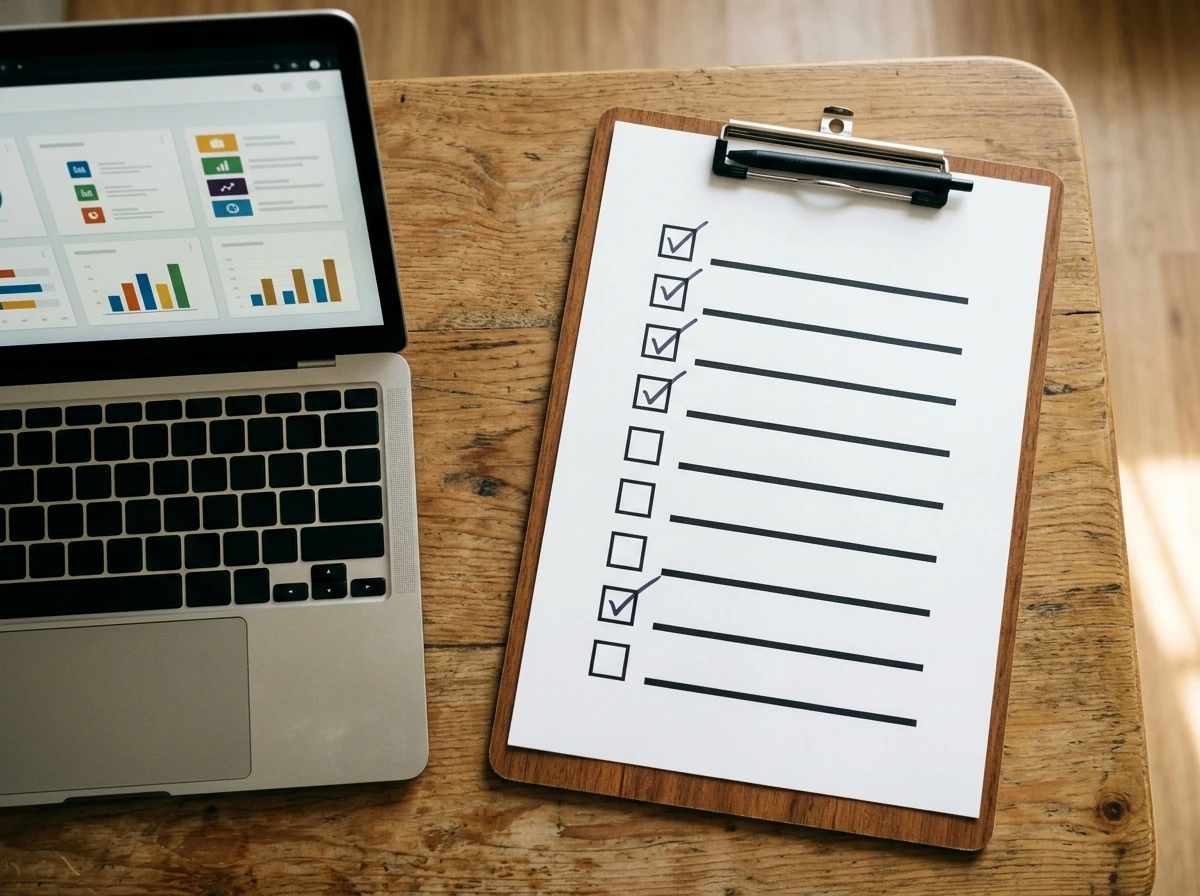
The Readiness Checklist
This is the part I wish someone had handed me earlier. Here's how to know you're actually ready to automate your marketing, not just ready to stop doing it manually because it's annoying.
You're ready to automate when:
- You know who your best customer is. Not a demographic. A specific type of company, with a specific problem, that you've successfully helped before.
- You have a message that has worked. At least one email, one script, one piece of content that got a real response from the right person.
- You have a follow-up process you've run manually at least a few times. You know what step two and step three look like because you've actually done them.
- You have somewhere to send people. A website that doesn't embarrass you, a way to capture a lead, a next step that makes sense.
- You're tracking something. Even a simple spreadsheet. You know where leads come from and what happens to them.
- You're losing deals because of volume or speed, not because of message. If you're losing because your pitch is weak, automate nothing. Fix the pitch.
- You have someone who will own the system. Automation that nobody monitors dies quietly. There needs to be a human who checks it.
If you can check five or more of those boxes, you're ready. If you can't, the work to do is still manual. And that's not a failure. That's just the right sequence.
What Automation Actually Does Well
Once you're ready, here's where automation earns its keep.
Follow-up sequences. This is the single highest-leverage thing you can automate. Most deals don't close on the first touch. Most businesses stop following up after one or two attempts. An automated sequence that sends the right message at the right interval, every time, without anyone having to remember, is worth more than almost any other marketing investment.
Lead nurturing. Not everyone who shows interest is ready to buy today. Automation keeps you present with those people over weeks and months, so when they're ready, you're the first name they think of.
Personalization at scale. This is the interesting one. 96% of marketers say personalized experiences lead to increased sales, but personalization at scale is only possible with the right automation infrastructure. You can't manually customize every touchpoint for hundreds of leads. The machine can, if it's built right.
Consistency. Your brand shows up the same way every time. Same tone, same timing, same quality. That consistency builds trust faster than sporadic, brilliant manual efforts ever will.
The Real Goal: Automation That Sounds Like You
Here's where most automation falls flat. It sounds like automation. Generic subject lines. Stiff copy. Sequences that feel like they came from a template library, because they did.
The real competitive advantage isn't choosing between human and automated. It's building automated systems that still feel personal. That still sound like the person behind the business. That carry the voice, the personality, and the specific knowledge of someone who actually knows the customer.
That's as much a design problem as a technology problem. The tools exist. N8N, AI content layers, CRM workflows, all of it is available and accessible. The hard part is building it so the output doesn't feel like output. It feels like a message from someone who gets it.
This is exactly the kind of system I design and build at Ignite. Not automation for its own sake. Automation that carries your voice, fits your sales process, and actually gets used by your team instead of sitting in a dashboard nobody opens.
The businesses I work with are typically at that inflection point. They've been doing things manually, they know what works, and now they need the system that takes that knowledge and runs it at scale. That's the right moment to build. And when you build it that way, it works.
One Last Thing
Stop thinking about this as a binary. You don't graduate from manual to automated and never look back. The best commercial operations run both in parallel. Automation handles the volume and consistency. Humans handle the moments that matter: the complex deal, the unhappy client, the relationship that needs a real conversation.
The goal is to automate your sales without hiring more people for the repetitive parts, so your actual humans can focus on the work that requires judgment. That's not some future state you're working toward. That's something you can build right now, if you've done the manual work first.
So: where are you in the checklist? If you're still building the foundation, great. Do it intentionally. If you're ready to build the machine, don't wait.
FAQ
How do I know when I'm actually ready to automate my marketing?
Run through the readiness checklist in this post. If you can check five or more boxes, including having a message that has already worked manually and a process you have run by hand at least a few times, you are ready to build the system.
What is the biggest mistake businesses make with marketing automation?
They automate before they know what works. Automating a broken message does not fix it, it just sends the broken message faster and at greater scale.
Can I use automation and still sound like a real person?
Yes, and that is the actual goal. The tools exist to carry your voice, your specific language, and your personality through automated sequences. It is a design problem as much as a technology problem.
Why does manual marketing matter if I plan to automate eventually?
The manual stage is your research lab. It teaches you which objections come up, what language your customers use, and which messages actually get a response. That raw material is what your automation will eventually run on.
What should I automate first once I am ready?
Follow-up sequences are the highest-leverage starting point. Most deals do not close on the first touch, and most businesses stop following up too early. An automated sequence that sends the right message at the right interval, every time, fixes that gap immediately.
Do I have to choose between manual and automated marketing?
No. The best operations run both at the same time. Automation handles volume and consistency, while humans handle the moments that require real judgment, like a complex deal or a relationship that needs a genuine conversation.