 IGNITE
Most businesses I talk to have an email list. They built it over years, collected addresses at trade shows, added customers after every sale. And then... nothing. Maybe a newsletter went out in December. Maybe a promo blast when inventory was slow. That's not an email program. That's a list collecting dust.
Here's the thing: email is the only marketing channel you actually own. Your Instagram following can disappear if the algorithm changes. Your WhatsApp broadcast list can get flagged. Your paid ads stop the moment you stop paying. But your email list? That's yours. And HubSpot's 2026 State of Marketing report, which surveyed over 1,500 marketers globally, found that AI-led personalization and automation are the top two trends right now, and email is the most natural channel to deliver both.
So let's fix the list-collecting-dust problem. Here are nine email types every growing business should be sending, tied to the exact moment in the customer journey where they actually do their job.
1. The Welcome Email
Send this when: Someone subscribes to your list, downloads something, or fills out a contact form.
This is the most-opened email you'll ever send. The subscriber just raised their hand. They're warm. They want to hear from you. A welcome email that lands within minutes of signup sets the tone for the entire relationship. Tell them who you are, what they can expect, and give them one useful thing right away. Not a pitch. Something genuinely valuable.
Skip this email and you've already wasted your best shot.
2. The Nurture Sequence
Send this when: A lead is in the awareness or consideration phase but hasn't bought yet.
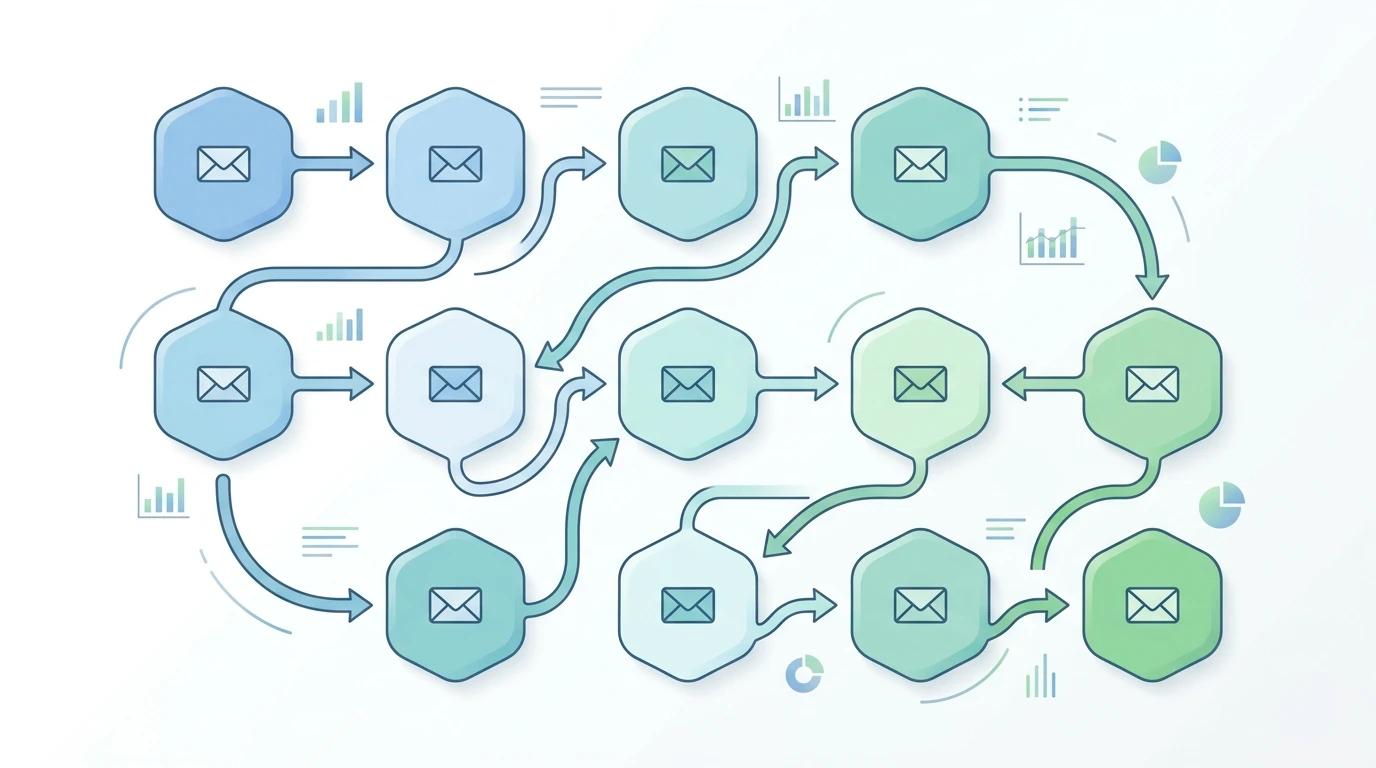
This is a series, not a single email. Three to five emails spread over a couple of weeks, each one building on the last. The goal isn't to sell. It's to educate, build trust, and stay top of mind. You're answering the questions they're already asking themselves before they ever reach out to you.
Most businesses skip this entirely and then wonder why leads go cold. The nurture sequence is what keeps them warm.
3. The Promotional Email
Send this when: You have an offer, a launch, a limited window, or a real reason to buy now.
This is the email most people picture when they think of email marketing. Done wrong, it's spam. Done right, it's the most direct revenue driver in your whole stack. The key is sending it to the right segment (people who've already shown interest) and giving them a genuine reason to act. Not fake urgency. A real one.
If every email you send is promotional, people tune out. But if you've been delivering value through your nurture sequence, this one lands completely differently.
4. The Onboarding Email
Send this when: A customer just bought or signed a contract.
The sale isn't the finish line. It's the starting gun. An onboarding email (or short sequence) tells the new customer exactly what happens next, sets expectations, and takes the edge off the anxiety that comes with any new purchase or partnership. It also cuts way down on the "so what do we do now?" messages your team has to field.
This email protects the relationship you just worked hard to build.
5. The Educational / Value Email
Send this when: Regularly, as part of your ongoing communication cadence.
This is the one most businesses skip because it doesn't feel like it "does anything." It does everything. A consistent educational email, whether it's a tip, a tutorial, or a quick breakdown of something useful, is what builds the kind of trust that makes people buy from you instead of a competitor who's slightly cheaper.
HubSpot's 2026 report found that 46.84% of marketers prioritize content that reflects brand values. An educational email is exactly that: a recurring proof point that you know your stuff and you're willing to share it.
6. The Re-Engagement Email
Send this when: A subscriber hasn't opened or clicked in 60 to 90 days.
Every list has a cold segment. People who signed up, got busy, and stopped paying attention. A re-engagement email is a direct ask: are you still interested? Sometimes it's a simple "we noticed you've been quiet" with a reason to come back. Sometimes it's a last-chance offer. The goal is either to reactivate them or to clean them off your list.
A smaller, engaged list beats a large, dead one every single time. Engagement rates matter a lot more than subscriber counts.
7. The Abandoned Cart / Abandoned Quote Email
Send this when: Someone started the buying process and didn't finish.
For e-commerce, this is the abandoned cart. For B2B businesses, it's the abandoned quote: the proposal that was opened and never answered, the demo that was scheduled and then ghosted. An automated follow-up email in that moment is one of the highest-ROI things you can build.
Timing matters. Send it within a few hours of the abandonment, not three days later when they've already bought from someone else.
8. The Transactional / Confirmation Email
Send this when: A transaction, action, or event just happened.
Order confirmations. Invoice receipts. Appointment reminders. These feel like administrative emails, but they're marketing opportunities. They get extremely high open rates because people expect them. A well-designed transactional email reinforces your brand, cuts down on support questions, and can include a soft next step (a related product, a referral ask, a review request) without feeling pushy.
Most businesses treat these as boring system outputs. The smart ones treat them as touchpoints.
9. The Review / Referral Request Email
Send this when: A customer has had enough time to experience the product or service (typically 7 to 30 days post-delivery).
This is the email most businesses are too shy to send. They don't want to seem needy. But asking a happy customer for a review or a referral isn't needy. It's smart. Word of mouth is still the most trusted form of marketing, and a well-timed email is the nudge that turns a satisfied customer into an active advocate.
Time it right. Ask too soon and they haven't formed an opinion. Ask too late and the moment has passed.
The Real Problem Isn't Knowing What to Send
Here's what I've seen over and over: business owners read a list like this, nod along, and then do nothing. Not because they don't believe it works. Because setting up nine email types feels like a full-time job, and they already have a full-time job.
That's the real gap. Not knowledge. Execution.
The American Marketing Association's 2026 trends report calls it the "Age of Autonomous Agents," the idea that automated systems are increasingly handling the repetitive, time-sensitive work that used to require a human watching a dashboard. Email sequences are the most accessible version of that for a mid-size business. You build them once. They run every time a new lead enters the funnel.
But only if you actually build them.
There's also a strategic angle here that's easy to miss. As privacy changes continue to limit third-party tracking, your email list becomes your most valuable owned asset. Every open, click, and reply is first-party data. It tells you who's ready to buy, who's going cold, and what content is actually resonating. That's business intelligence, not just marketing metrics.
What These Nine Emails Have in Common
Every single one of them is triggered by a moment. Not a calendar date. Not "it's been a while." A specific action or stage in the customer journey. That's the shift most businesses need to make: from batch-and-blast thinking to journey-first thinking.
When you map your emails to moments, the whole system becomes logical. A welcome email makes sense because someone just subscribed. A re-engagement email makes sense because someone went quiet. A referral request makes sense because a customer just had a good experience. None of this requires guesswork. It requires a system.
You Don't Need an Email Marketer. You Need a System.
I'll be straight with you. If you're running a mid-size business with a lean team, you're not going to hire a dedicated email marketer to manage nine sequences. That's just not realistic. But you also can't keep doing the occasional blast and calling it a strategy.
What you need is a system that runs these sequences automatically, triggered by the right moments, without someone manually hitting send every time. That's exactly what the Marketing Machine at Ignite is built to do: set up the sequences, connect them to your CRM and sales pipeline, and keep them running without a full-time person managing it.
The nine email types above aren't aspirational. They're the minimum viable email operation for a business that wants to stop leaking revenue at every stage of the journey. The question isn't whether you should be sending them. It's whether you have the system in place to actually do it.
If you don't, that's the gap worth closing first.
FAQ
Why is email considered a channel you actually own?
Unlike social media or paid ads, your email list cannot be taken away by an algorithm change or a platform decision. Every contact on it is yours, and the data from opens, clicks, and replies belongs to your business.
How many emails should be in a nurture sequence?
Three to five emails spread over a couple of weeks is a solid starting point. Each one should build on the last, focusing on education and trust rather than pushing for a sale.
What counts as an abandoned quote for a B2B business?
It is a proposal that was opened and never answered, or a demo that was scheduled and then ignored. An automated follow-up sent within a few hours of that drop-off is one of the highest-ROI emails you can build.
How long should I wait before sending a review or referral request?
Somewhere between 7 and 30 days after delivery is the right window, depending on your product or service. Ask too soon and the customer has not formed a real opinion yet; ask too late and the moment has passed.
Why should I bother with transactional emails like order confirmations?
People expect them, so open rates are extremely high, which makes them a natural touchpoint to reinforce your brand and include a soft next step like a referral ask or review request.
What is the difference between batch-and-blast email and journey-first email?
Batch-and-blast means sending the same message to everyone on a calendar schedule, regardless of where they are in the buying process. Journey-first means each email is triggered by a specific action or stage, which is what makes the whole system feel relevant rather than random.